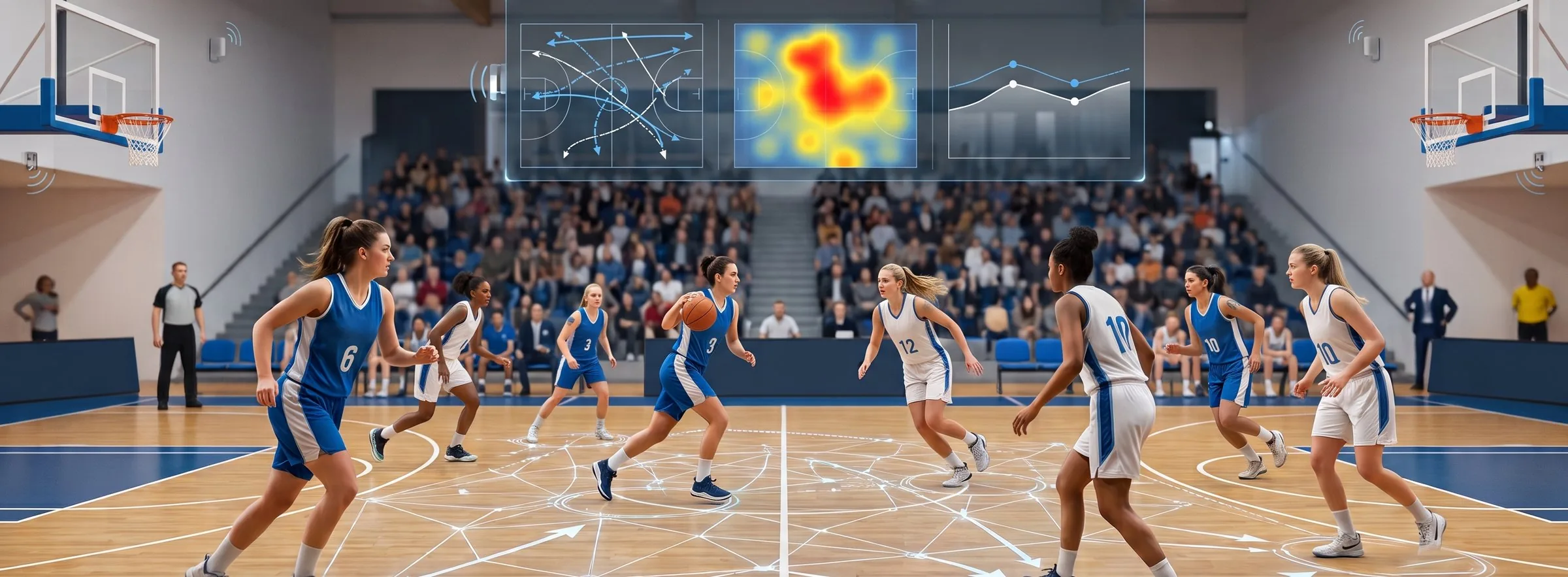
Sports Technology Athlete Tracking & Tactical Movement Analysis
P-Square's sports technology solution is built on UWB ToA (Time of Arrival) high-precision positioning. Athletes wear a lightweight tag; anchors are battery powered and require no cabling, so they can simply be placed around a court. Accuracy reaches 10–30 cm in line-of-sight conditions, holding up under high-speed movement. The system provides live trajectories, tactical movement statistics and competition records, and can be paired with UWB PDOA 3D positioning and IMU inertial sensing to measure jumps and sprints, plus dual-camera AI skeletal recognition for movement-correctness analysis. Deployed at a domestic university of sport.
Pain Points and Solutions by Unit
| Unit | Pain Point | Solution |
|---|---|---|
| Coaching Staff | Training and matches can only be reviewed on video; movement and court coverage lack objective data. | Athletes wear tags; the system produces live trajectories, tactical movement statistics and heat maps, comparable across sessions and opponents. |
| Venue / University | Venues cannot be modified, cabling is impractical, and equipment must be portable. | ToA anchors are battery powered and cable-free — six anchors at the corners and sideline midpoints cover a full court, and they can be packed away after the session. |
| Sports Science | Jump height, instantaneous speed and acceleration are difficult to measure on a real field of play. | UWB PDOA 3D positioning combined with IMU inertial sensing measures jump height and changes in running speed. |
| Training Guidance | Movement correctness requires a coach on site, and athletes often overlook their own posture faults. | Dual-camera AI skeletal recognition detects keypoints from the front and side simultaneously, letting athletes self-correct on screen and avoid injury caused by poor form. |
System Applications

Live athlete positions and trajectories on the venue plan.
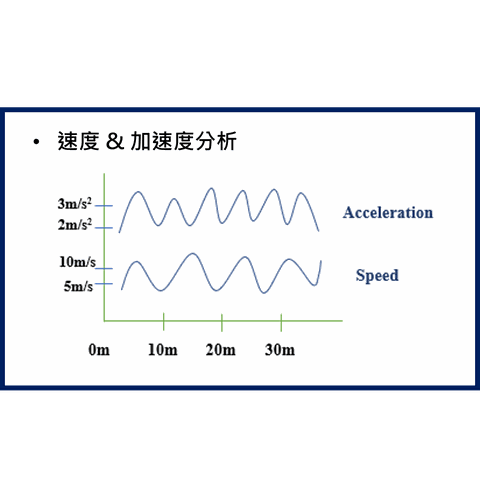
Distance covered, speed, coverage area and dwell-time statistics.

Training instructions and live metrics pushed to coaching devices.

Jump height and sprint speed measurement plus dual-camera AI form analysis.
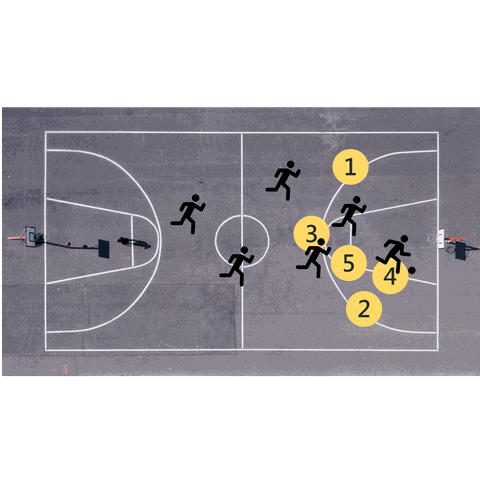
Movement heat maps and tactical route replay for post-match review.
Solution Modules
| Module | Positioning Technology | Accuracy / Coverage | Hardware | Core Value |
|---|---|---|---|---|
| Live athlete tracking | UWB ToA (TWR ranging) | 10–30 cm in line of sight | Battery-powered anchors + lightweight tags | Live trajectories, competition records, tactical movement statistics |
| 3D motion measurement | UWB PDOA 3D + IMU | 3D coordinates + attitude | PDOA anchors + IMU-equipped tags | Jump height, running speed and acceleration profiles |
| Form analysis | Dual-camera AI skeletal recognition | Front + side keypoints | Two RTSP IP cameras | Simultaneous detection of frontal features and lateral wrist range of motion |
| Evaluation starter kit | UWB ToA | 10–30 cm | Start Kit: 6 anchors + 2 tags + 1 receiver | Lets SIs and end users validate first; boards are CE / FCC certified |
Case Study
Domestic University of Sport — UWB ToA Player Tracking on the Basketball Court
The court could neither be modified nor cabled, so a ToA architecture was chosen: six battery-powered anchors at the corners and sideline midpoints, with players wearing tags. Anchors relay position data to the server, letting coaches view live results on a phone or computer and generate competition records and tactical movement statistics afterwards.
- 10–30 cm positioning accuracy in line-of-sight conditions.
- Battery-powered, cable-free anchors with roughly 16 hours of runtime per charge.
- Six anchors cover a full 28 × 15 m court.
- Live viewing from a phone, plus post-session trajectory replay.
Entry-level option: a Start Kit (6 anchors + 2 tags + 1 receiver + back-end software) is available for SIs and universities to validate feasibility; the boards are CE / FCC certified. Once proven, it can be upgraded to the full RTLS platform with historical records, trajectory replay and restricted zones.
Field Test Clip
UWB Runner Tracking on an Athletics Track
Two runners each wear a UWB tag, with anchors on tripods beside the track. The lower half shows the live positioning view: the red and green dots on the eight-lane diagram follow the runners, showing which lane each is in and who is ahead. Muted, loops automatically.
Frequently Asked Questions
Can it be used on an outdoor court? Does sunlight or weather affect it?
How many anchors are needed, and will the batteries last a full event?
Will the tag interfere with an athlete's movement?
We would like to trial this at small scale — is there an entry-level option?
Train on Data, Review with Data
Contact the P-Square project team to plan athlete tracking for training venues and competitions.
Professional Consultation